Loans and debts are part of everyday financial life. Individuals borrow money to meet personal needs, while businesses and organisations obtain loans to finance operations, purchase equipment, expand their activities, or overcome temporary financial difficulties.
Governments also borrow to fund public projects and meet other financial obligations. Although borrowing provides access to money when it is needed, it comes with a cost that borrowers must understand before entering into a credit agreement. One of the most important costs associated with borrowing is interest.
Interest is the amount charged by a lender for allowing another person or organisation to use borrowed money over an agreed period. It is commonly expressed as a percentage of the principal, which represents the original amount borrowed.
For the borrower, interest is an additional financial obligation beyond the repayment of the principal. For the lender, it represents income earned from providing credit.
Understanding interest costs is important because the amount borrowed does not always reflect the total amount that must eventually be repaid.
A borrower who receives ₦500,000, for example, may be required to repay considerably more depending on the interest rate, repayment period, loan arrangement, and additional charges attached to the facility. These costs can influence personal savings, business profitability, cash flow, and long-term financial stability.
Many borrowers concentrate mainly on whether they can obtain a loan and how much money they will receive. Less attention is sometimes given to the total repayment obligation, the method used to calculate interest, or the consequences of missing repayment dates.
This can create financial difficulties, particularly when the borrower has not adequately assessed the cost of borrowing.
Read: Chase Routing Numbers for Wire Transfers in the US
A proper understanding of interest costs therefore requires more than knowing the percentage stated in a loan agreement. It involves examining how interest is calculated, the difference between simple and compound interest, the effect of repayment periods, the relationship between interest rates and debt accumulation, and the importance of responsible borrowing. These issues are discussed in this chapter to provide a clearer understanding of how interest affects loans and debts.
Meaning of Interest Costs on Loans and Debts
Interest cost refers to the financial charge incurred by a borrower for using money obtained from a lender. It is generally calculated based on the amount borrowed, the applicable interest rate, and the period for which the money remains outstanding. The specific amount payable depends on the terms of the credit agreement.
In a loan arrangement, the principal is the original amount received by the borrower, while interest represents the additional amount charged for borrowing that principal. For instance, if an individual borrows ₦200,000 at an annual interest rate of 10%, the interest for one year under a simple-interest arrangement would be ₦20,000. The total repayment would therefore be ₦220,000, excluding any additional fees.
Interest costs are not limited to bank loans. They may also arise from credit card balances, overdrafts, hire-purchase arrangements, personal loans, business financing, and other forms of credit. Although the calculation methods may differ, the underlying principle remains the same: borrowing creates a financial obligation that must be settled according to agreed conditions.
It is important to distinguish between the interest rate and the actual interest cost. The interest rate is the percentage used to calculate the charge, whereas the interest cost is the monetary amount the borrower pays. A loan with a relatively low interest rate may still become expensive if repayment extends over a long period. Similarly, a higher interest rate applied to a short-term loan may produce a smaller total interest amount than expected, depending on the principal and repayment arrangement.
Interest costs should also be considered alongside other borrowing expenses, such as processing fees, administrative charges, insurance premiums, and late-payment penalties. These additional expenses may increase the overall cost of obtaining credit, even when they are not classified as interest.
The Principal Components of Borrowing Costs
The total cost of borrowing is influenced by several interconnected factors. Understanding these components helps borrowers assess whether a loan is affordable and suitable for their financial circumstances.
Principal Amount
The principal is the amount of money initially borrowed from a lender. It forms the foundation upon which interest is calculated. Generally, a larger principal produces a higher interest charge when the interest rate and repayment period remain unchanged.
For example, borrowing ₦1,000,000 at an annual interest rate of 12% produces a higher annual simple-interest charge than borrowing ₦300,000 at the same rate. This explains why borrowers should carefully determine the amount they genuinely need rather than borrowing more than necessary.
The principal also affects the size of repayment instalments. Where repayment is structured over a fixed period, a larger principal generally results in higher periodic payments, assuming the interest rate and other conditions are unchanged.
Interest Rate
The interest rate determines the percentage charged on the outstanding loan balance or principal, depending on the calculation method. It may be expressed as a monthly, quarterly, or annual percentage.
Interest rates are influenced by several factors, including the lender’s funding costs, prevailing economic conditions, the borrower’s creditworthiness, the loan duration, and the level of risk associated with the facility.
A borrower should not assume that two loans carrying the same stated interest rate will necessarily have the same total cost. The calculation method, repayment frequency, fees, and loan duration must also be considered.
Repayment Period
The repayment period refers to the agreed duration within which the borrower is expected to settle the loan. It has a direct effect on the total interest paid.
A longer repayment period may reduce the amount required in each instalment, making the loan appear more manageable. However, where interest continues to accrue over the extended period, the borrower may pay more interest overall.
A shorter repayment period usually reduces the time during which interest accumulates, although it may require larger periodic payments. Borrowers must therefore balance the desire to reduce interest costs against their ability to meet repayment obligations without disrupting essential expenses.
Additional Charges
Some lenders impose fees in addition to interest. These may include loan processing charges, account maintenance fees, insurance costs, documentation expenses, and penalties for late repayment.
Such charges should be examined before accepting a loan offer. A borrower who considers only the advertised interest rate may underestimate the actual financial commitment.
Read: Capitec Bank Cellphone Banking- How to buy data, airtime, transfer money and check account balance
Types of Interest and How They Are Calculated
Interest may be calculated using different methods. The method adopted in a loan agreement determines how the borrowing cost develops over time.
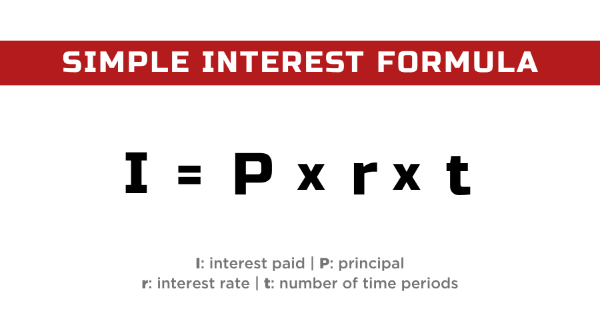
Simple Interest
Simple interest is calculated only on the original principal amount throughout the agreed period. The interest does not accumulate on previously charged interest.
The formula is:
Where:
-
III = Interest charged
-
PPP = Principal amount
-
RRR = Annual interest rate expressed as a decimal
-
TTT = Time in years
Consider a borrower who obtains a loan of ₦400,000 at an annual simple-interest rate of 10% for two years.
The total repayment would be ₦480,000, excluding additional charges.
Simple interest is relatively straightforward to calculate because the interest charge remains based on the original principal. However, borrowers should confirm whether the lender uses this method and whether repayments reduce the outstanding principal during the loan period.
Compound Interest
Compound interest is calculated on the original principal and accumulated interest from previous periods. This means that interest may earn further interest as the debt remains outstanding.
The formula is:
Where:
-
AAA = Accumulated amount
-
PPP = Principal
-
rrr = Annual interest rate
-
nnn = Number of compounding periods per year
-
ttt = Time in years
For example, if ₦400,000 is invested or borrowed at an annual compound rate of 10%, compounded annually for two years, the accumulated amount would be:
The interest component is ₦84,000.
This amount is higher than the ₦80,000 generated under the simple-interest example because the second year’s interest is calculated on the principal plus the first year’s interest.
Compound interest can significantly increase the cost of debt when balances remain unpaid over extended periods. It is particularly relevant to certain revolving credit arrangements and overdue balances, depending on the contractual terms.
Fixed Interest Rate
A fixed interest rate remains unchanged throughout a specified period or the entire loan term, depending on the agreement.
The main advantage is predictability. Borrowers can estimate their repayment obligations more easily because the agreed rate does not fluctuate during the fixed period.
However, a fixed rate does not necessarily mean that the total repayment amount will remain unchanged under every circumstance. Additional charges, missed payments, or other contractual provisions may affect the amount ultimately payable.
Variable Interest Rate
A variable interest rate changes in response to an agreed benchmark or other conditions specified in the loan contract.
When the applicable rate increases, the borrower’s interest costs may rise. A reduction in the rate may lower the borrowing cost, depending on how the facility is structured.
Variable-rate loans can therefore introduce uncertainty into financial planning. Borrowers should understand how often the rate may change, what determines the adjustment, and whether any limits apply.
Read: FNB Cellphone Banking: How to Register, transfer money and check Balance
Factors That Influence Interest Costs
Interest costs are shaped by more than the amount borrowed. Several financial and economic conditions determine the cost of credit.
Creditworthiness of the borrower: Lenders assess the likelihood that a borrower will repay the loan. Factors such as repayment history, existing debt obligations, income stability, and financial records may influence the interest rate offered.
Loan duration: The length of time over which a loan remains outstanding affects the amount of interest that may accumulate. Longer repayment periods can increase total interest costs, particularly where the principal reduces slowly.
Economic conditions: Inflation, monetary policy, market liquidity, and general lending conditions can influence interest rates. Changes in these conditions may affect the cost of new borrowing and variable-rate facilities.
Loan purpose and security: Some loans are supported by collateral, while others are unsecured. The nature of the facility and the risk assumed by the lender may influence the interest rate and other contractual conditions.
Repayment behaviour: Making payments on time helps borrowers avoid additional charges associated with default or lateness. Conversely, missed payments may increase the outstanding obligation where penalties or additional interest apply.
The Effect of Interest Costs on Personal and Business Finances
Interest costs have important implications for financial management. For individuals, loan repayments reduce the amount of income available for other needs, including housing, food, education, transportation, healthcare, and savings.
When borrowing costs become excessive relative to income, borrowers may struggle to meet their obligations. Some may respond by obtaining additional loans to settle existing debts, creating a cycle in which repayment difficulties become increasingly difficult to manage.
Interest also affects the ability to save. Money used to service expensive debts is unavailable for emergency funds, investments, or other financial objectives. This can weaken an individual’s financial position, particularly when unexpected expenses arise.
For businesses, interest costs directly influence cash flow and profitability. A company that borrows to purchase equipment, expand production, or finance working capital must generate sufficient returns to cover both the principal and interest obligations.
Where borrowing costs are properly managed, loans can support business expansion and productive investment. However, when interest expenses consume a substantial portion of operating income, the business may experience reduced profitability and limited financial flexibility.
For example, a business that earns ₦5 million in operating profit but incurs ₦1.5 million in annual interest expenses has less income available for reinvestment, dividends, and other obligations than a business with similar operating performance and lower borrowing costs.
This illustrates why financial managers must consider the cost of debt when making financing decisions. Borrowing should be assessed in relation to the expected benefits of the investment and the organisation’s capacity to meet repayment obligations.
Understanding Loan Repayment Structures
Loan repayment arrangements determine how principal and interest are settled over time. Two common structures are amortising loans and interest-only loans.
Amortising Loans
An amortising loan is repaid through scheduled instalments that cover both interest and part of the principal. In many standard repayment arrangements, the interest portion is relatively higher at the beginning because the outstanding balance is larger.
As the principal reduces, the interest charged on the remaining balance also decreases, assuming the interest rate remains unchanged.
This structure enables borrowers to gradually reduce their debt rather than postponing the entire principal repayment until the end of the loan term.
Interest-Only Loans
Under an interest-only arrangement, the borrower pays interest during an agreed period without necessarily reducing the principal. The principal may become payable at the end of the interest-only period or according to another agreed arrangement.
Although the periodic payments may initially be lower, the borrower must plan carefully for the eventual repayment of the principal.
Failure to prepare for this obligation may create financial pressure when the principal becomes due.
Strategies for Managing Interest Costs
Effective debt management begins before a loan is obtained. Borrowers should evaluate the purpose of borrowing, compare available credit options, and determine whether the repayment obligation is consistent with their income or expected cash flow.
One useful approach is to compare the total repayment amount rather than focusing exclusively on the advertised interest rate. This provides a clearer picture of the financial commitment.
Borrowers should also read loan agreements carefully, paying particular attention to the calculation method, repayment dates, additional charges, default provisions, and conditions governing changes in interest rates.
Where financially possible, making additional principal repayments can reduce the outstanding balance and potentially lower future interest charges. However, borrowers should first establish whether the lender imposes early repayment fees or other restrictions.
Maintaining a realistic budget is equally important. A borrower should account for existing debts, regular household or business expenses, emergency needs, and possible changes in income before accepting another financial obligation.
For individuals with several outstanding debts, organising repayment according to interest rates and contractual requirements can help improve financial control. High-interest debts often deserve particular attention because they can accumulate costs rapidly.
Businesses can also manage borrowing costs by preparing cash-flow forecasts, monitoring debt-service obligations, and ensuring that borrowed funds are directed towards activities capable of supporting repayment.
Financial discipline does not necessarily mean avoiding loans altogether. Rather, it involves understanding the financial implications of borrowing and making decisions that remain manageable over time.
Read: Standard Bank Cellphone Banking:How to Register, transfer money and check Balance
How Interest Cost Affects Your Loan Decisions
Interest cost plays a significant role in determining whether a loan is financially suitable for an individual or business. Although borrowing provides access to funds that may not be immediately available, the decision to obtain a loan should not be based solely on the amount offered by the lender. The cost of borrowing, particularly the interest payable over the repayment period, determines the actual financial commitment involved.
Many borrowers are attracted to loans because of their immediate benefits, such as meeting urgent expenses, financing education, purchasing property, or expanding a business. However, the long-term implications of repayment are sometimes overlooked. A loan that appears affordable at the point of approval may become burdensome when interest charges, repayment obligations, and other fees are taken into consideration.
Understanding interest costs allows borrowers to assess available loan options more carefully and make decisions that reflect their financial circumstances.
1. Influence on the Choice of Loan
Interest rates often influence the type of loan a borrower chooses. When comparing offers from different lenders, borrowers may naturally prefer the facility with the lower interest rate. However, the stated rate should not be considered in isolation.
The repayment period, interest calculation method, processing charges, and other contractual conditions can affect the overall cost of borrowing. A loan with a lower advertised rate may not necessarily be cheaper if it attracts substantial additional charges or requires a longer repayment period.
For this reason, borrowers should examine the total amount repayable before accepting a loan offer. This approach provides a clearer understanding of the financial obligation and reduces the possibility of making decisions based on incomplete information.
2. Determining Loan Affordability
Interest cost also affects the affordability of a loan. Affordability refers to the borrower’s ability to meet repayment obligations without placing excessive pressure on existing financial commitments.
A borrower may qualify for a substantial loan but still lack the financial capacity to repay it comfortably. The monthly or periodic repayment amount should therefore be assessed against available income, regular expenses, existing debts, and other financial responsibilities.
For example, an individual earning ₦300,000 monthly may find a loan repayment of ₦120,000 difficult to sustain after accounting for rent, transportation, food, utilities, and other obligations. Even where the lender approves the facility, the borrower must determine whether the repayment arrangement is realistic.
Interest costs become particularly important when a loan carries a high rate or a variable interest arrangement. Changes in the applicable rate may increase repayment obligations and affect the borrower’s financial stability.
3. Influence on the Amount Borrowed
The cost of interest should also guide decisions about how much money to borrow. Since interest is generally calculated based on the principal or outstanding balance, borrowing a larger amount can increase the total repayment obligation.
Borrowers sometimes request more money than they actually need because the additional funds appear convenient. However, unnecessary borrowing creates an additional interest burden without necessarily providing corresponding financial benefits.
A more careful approach involves identifying the actual financial requirement and borrowing only what is reasonably necessary. This is particularly important for businesses, where excessive borrowing may increase financing expenses and reduce the funds available for daily operations.
4. Effect on Loan Repayment Duration
The repayment period is another important consideration when evaluating interest costs. Extending a loan over a longer period may reduce the size of individual instalments, making repayment appear more manageable. However, the borrower may pay more interest over the life of the loan.
Conversely, a shorter repayment period can reduce the total interest payable, although the required instalments may be higher.
The decision should therefore reflect the borrower’s financial capacity rather than focusing exclusively on obtaining the lowest possible monthly repayment.
For instance, a business may choose a longer repayment period to preserve working capital, particularly where its income is seasonal. Another business with stable cash flow may prefer a shorter repayment arrangement to reduce its overall financing expenses.
5. Encouraging Comparison Between Lenders
Interest costs encourage borrowers to compare loan offers before making a commitment. Different financial institutions may provide varying interest rates, repayment structures, eligibility requirements, and additional charges.
Comparing these conditions helps borrowers understand the financial implications of each offer. It also reduces the likelihood of accepting a loan simply because it is readily available.
Where possible, borrowers should request a repayment schedule showing the principal, interest, fees, and total amount payable. This information makes it easier to identify the actual cost of each facility.
Read: Register for Tesco Online banking and Mobile App
6. Influence on Financial Risk and Future Stability
A loan decision can affect a borrower’s financial position long after the borrowed funds have been spent. High interest costs may reduce disposable income, limit savings, and create difficulties when unexpected expenses arise.
For businesses, substantial interest obligations can reduce profitability and restrict future investment. Funds that could have been used to purchase equipment, improve operations, or employ additional workers may instead be directed towards servicing debt.
Borrowers should therefore consider not only their present ability to repay but also how the loan may affect their future financial commitments.
7. Supporting Responsible Borrowing Decisions
Ultimately, understanding interest costs promotes responsible borrowing. It encourages individuals and businesses to examine the purpose of a loan, assess its affordability, compare available offers, and consider the consequences of delayed repayment.
A loan should provide a financial benefit that reasonably justifies its cost. For personal borrowing, this may involve meeting an essential need or financing an important investment. For businesses, the expected benefits of borrowing should be considered alongside the interest expenses and repayment obligations.
Borrowers who understand these issues are better positioned to avoid unnecessary debt and maintain control over their financial commitments.
Factors That Influence Interest Costs
Interest costs are influenced by several financial, economic, and contractual factors that determine how much a borrower pays for the use of borrowed funds. Although the interest rate is often the first consideration when evaluating a loan, the actual cost of borrowing depends on more than the percentage stated in the loan agreement. The amount borrowed, repayment period, method of interest calculation, creditworthiness of the borrower, and prevailing economic conditions all contribute to the final amount payable.
Understanding these factors is important for individuals and businesses because borrowing decisions have direct implications for financial planning, cash flow, savings, and long-term financial stability. A proper assessment of interest costs enables borrowers to compare loan offers, understand their repayment obligations, and avoid financial commitments that may become difficult to manage.
1. Principal Amount Borrowed
The principal represents the original amount of money obtained from a lender. It is one of the most direct determinants of interest cost because interest is generally calculated on the principal or the outstanding loan balance.
Where the interest rate and repayment period remain constant, a larger loan amount ordinarily attracts a higher interest charge than a smaller loan. For instance, borrowing ₦1,000,000 at an annual interest rate of 12% produces a greater interest obligation than borrowing ₦300,000 under the same conditions.
This explains why borrowers should carefully assess their financial needs before applying for credit. Borrowing more than necessary may create additional interest expenses without providing any corresponding financial benefit.
2. Interest Rate
The interest rate represents the percentage charged by a lender for providing credit. It is one of the most visible elements of borrowing costs and has a direct influence on the total amount repayable.
A higher interest rate generally increases the cost of borrowing, while a lower rate may reduce the interest payable, provided other loan conditions remain unchanged.
Interest rates may differ among lenders depending on their funding costs, lending policies, assessment of borrower risk, and prevailing economic conditions. Consequently, borrowers should compare the rates offered by different financial institutions rather than assuming that all loans carry similar costs.
It is equally important to understand whether the quoted rate is monthly or annual and whether it is calculated on the original principal or the outstanding balance. These distinctions can significantly affect the actual cost of a loan.
3. Loan Repayment Period
The repayment period refers to the length of time allowed for settling a loan. It influences interest costs because the duration of borrowing determines how long interest may continue to accrue.
Generally, a longer repayment period can result in higher total interest expenses, particularly where the principal remains outstanding for an extended period. Although longer repayment arrangements may reduce individual instalments, they can increase the overall financial commitment.
A shorter repayment period may reduce total interest costs, but it usually requires larger instalments. Borrowers must therefore consider their income, existing financial obligations, and ability to maintain regular repayments before selecting a repayment schedule.
The decision should reflect a reasonable balance between manageable instalments and the desire to minimise borrowing expenses.
Read:All Australia bank Swift code
4. Creditworthiness of the Borrower
Creditworthiness refers to a borrower’s perceived ability and willingness to repay borrowed funds according to agreed terms. Lenders commonly assess this through factors such as repayment history, income stability, existing debt obligations, employment records, and available financial information.
Borrowers with a consistent repayment record and stable income may qualify for more favourable lending conditions, depending on the lender’s policies. Conversely, individuals or businesses considered to present higher repayment risks may face higher interest rates or stricter borrowing requirements.
This is because lenders consider the possibility of delayed repayment or default when determining the terms of a loan.
Maintaining a good repayment record, providing accurate financial information, and managing existing debts responsibly can therefore improve a borrower’s position when seeking credit.
5. Type and Purpose of the Loan
The nature of a loan can also influence its interest cost. Personal loans, business loans, mortgages, vehicle financing, and overdraft facilities may carry different interest rates and repayment conditions.
The purpose of borrowing is relevant because lenders may assess the expected use of funds and the associated repayment risks. A loan intended for purchasing property, for example, may be structured differently from an unsecured personal loan.
Secured loans are supported by collateral, such as property or other acceptable assets, while unsecured loans do not require the same form of security. Depending on the lender’s assessment, collateral may reduce the perceived risk of lending and influence the interest rate offered.
However, borrowers should not assume that a secured loan is automatically cheaper. The full contractual terms and additional expenses must still be examined.
6. Economic Conditions and Inflation
Broader economic conditions influence the cost of borrowing. Factors such as inflation, monetary policy, market liquidity, and general economic uncertainty can affect lending rates.
Inflation is particularly relevant because it reduces the purchasing power of money over time. Lenders may consider expected inflation when determining the interest rates charged on loans.
Monetary policy decisions can also influence borrowing costs by affecting the financial conditions under which banks and other lending institutions operate.
When economic conditions change, interest rates on new loans and some existing variable-rate facilities may also change. Borrowers should therefore consider the possibility of changing borrowing costs when entering into long-term credit agreements.
7. Method of Interest Calculation
The method used to calculate interest has a significant effect on the total borrowing cost. Common approaches include simple interest, compound interest, and reducing-balance calculations.
Under simple interest, the charge is calculated on the original principal throughout the agreed period. Under compound interest, accumulated interest may become part of the balance on which subsequent interest is calculated.
Reducing-balance interest is calculated on the outstanding principal after accounting for repayments. As the borrower settles part of the principal, the balance on which interest is charged decreases.
These methods can produce different repayment outcomes even when the principal and stated interest rate appear similar.
Borrowers should therefore establish how interest is calculated before accepting a loan. Understanding the method helps prevent misunderstandings about repayment obligations and the total cost of borrowing.
8. Repayment Behaviour and Payment History
A borrower’s repayment behaviour can influence both the immediate cost of debt and future access to credit.
Making repayments according to the agreed schedule helps borrowers avoid late-payment penalties and other charges that may arise from default. It also supports a positive repayment record, which may be considered when applying for credit in the future.
Where payments are missed, the outstanding balance may attract additional charges depending on the loan agreement. In some arrangements, unpaid interest or penalties may further increase the amount owed.
Persistent repayment difficulties can therefore create financial pressure and make it more difficult for borrowers to obtain favourable credit terms in the future.
9. Additional Fees and Charges
Interest is not the only expense associated with obtaining a loan. Financial institutions may impose processing fees, administrative charges, documentation costs, insurance premiums, and other expenses.
Although these charges may not form part of the stated interest rate, they contribute to the overall cost of borrowing.
For example, a borrower may receive a loan with a relatively low interest rate but discover that substantial processing fees increase the amount required to obtain the facility.
It is therefore important to distinguish between the interest rate and the total cost of credit. Reviewing the loan agreement and repayment schedule helps borrowers identify expenses that may otherwise be overlooked.
10. Fixed and Variable Interest Rates
The structure of the interest rate also affects borrowing costs.
A fixed interest rate remains unchanged during the agreed fixed-rate period. This provides greater predictability because borrowers can plan around a known rate.
A variable interest rate, on the other hand, may change according to an agreed benchmark or other contractual conditions. Where the rate increases, the borrower’s interest expenses may also rise.
Variable-rate arrangements can therefore introduce uncertainty into financial planning, particularly for borrowers with long repayment periods or limited financial flexibility.
Before accepting either arrangement, borrowers should understand the conditions governing interest adjustments and how changes may affect their repayment obligations.
11. Loan Security and Collateral
Collateral refers to an asset pledged to support a borrowing arrangement. It provides the lender with a form of security if the borrower fails to meet the repayment obligations.
The availability and value of collateral may influence the lender’s assessment of risk and the terms offered to the borrower.
Loans supported by acceptable security may attract different interest rates from unsecured facilities because the lender has an additional means of recovering outstanding funds in the event of default.
However, collateral introduces a separate risk for the borrower. Failure to repay a secured loan may result in the loss of the pledged asset, subject to the applicable agreement and legal requirements.
Borrowers should therefore consider both the interest cost and the consequences of using personal or business assets as security.

Contact us; Kokobest04@gmail.com
- SBA 504 loan and the SBA 7(a) loan: Which Is Better for Your Business? - October 19, 2026
- List of Banks and Credit Unions in the United kingdom - October 8, 2026
- List of Banks and Credit Unions in the United States - October 8, 2026
Related Posts
 Fixed-Rate vs. Adjustable-Rate Mortgage: Which Is Right for You?
Buying a home is one of the largest financial commitments many people make, and choosing…
 What is the difference between Home Equity Loan vs. HELOC
For many homeowners, a house represents more than a place to live. As mortgage payments…
 How to easily Refinance a Mortgage
Refinancing a mortgage means replacing an existing home loan with a new one, usually from…
 Best personal loans lender in Nigeria
Personal loans have become an important source of financial support for many Nigerians. People may…
 How Debt-Consolidation Loans Work: A Practical Guide for Borrowers
Having several debts at once can make personal finances harder to manage than they need…
 FNB Cellphone Banking: How to Register, transfer money and check Balance
First National Bank (FNB) is one of Africa's most respected and innovative financial institutions. With…
 Lists of Banks and Microfinance Banks Offering Business Loans to SMEs in Nigeria
Access to finance remains one of the major concerns facing small and medium-sized enterprises (SMEs)…
 Capitec Bank Cellphone Banking- How to buy data, airtime, transfer money and check account balance
Capitec Bank, one of South Africa’s fastest-growing financial institutions, has built its reputation on simplicity,…
 Nedbank’s Cellphone Banking:How to register, transfer money, buy airtime and data, check balance
In today’s dynamic digital era, mobile banking has become indispensable for managing finances anytime, anywhere.…
 Standard Bank Cellphone Banking:How to Register, transfer money and check Balance
People no longer want to spend hours standing in queues or traveling to a bank…