Small businesses often need financing to purchase equipment, acquire commercial property, expand operations, or manage everyday expenses. However, choosing the right loan can be challenging because different financing options have different eligibility requirements, repayment terms, interest rates, and permitted uses.
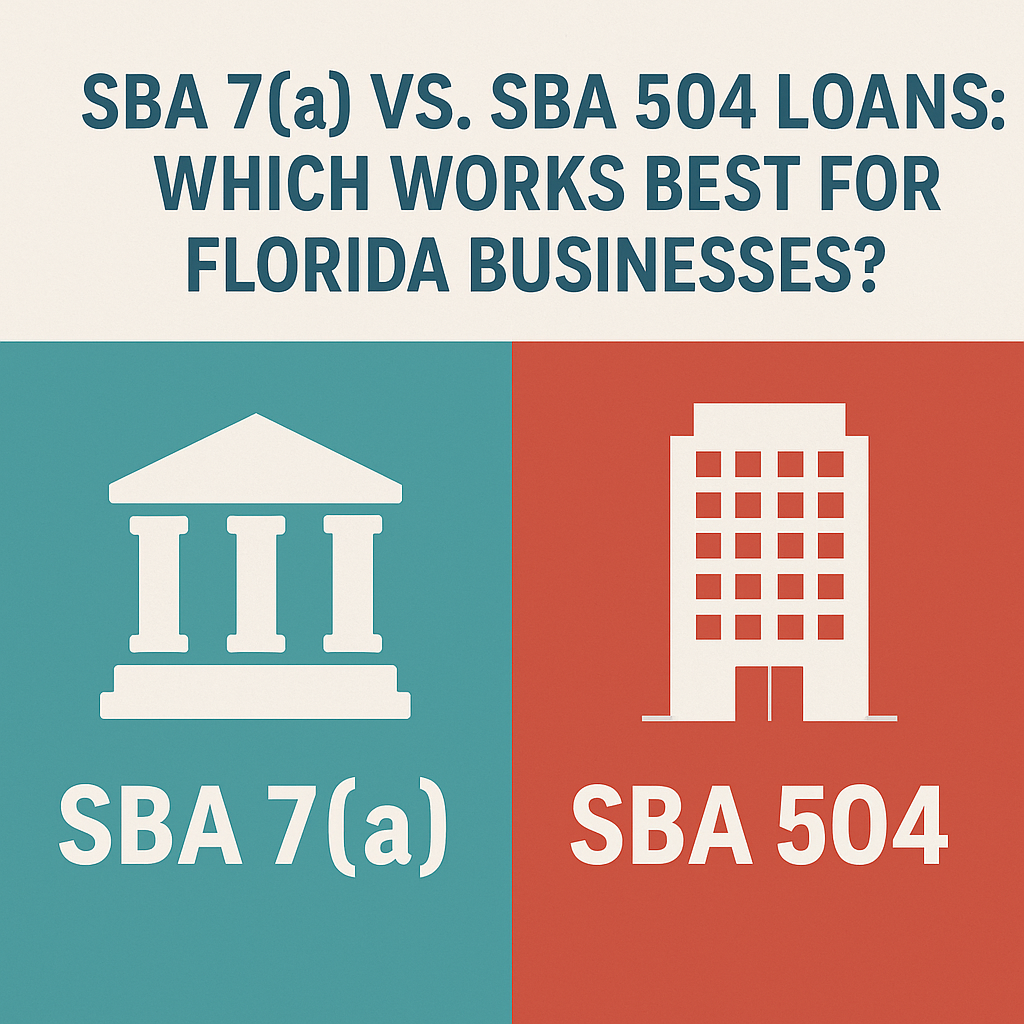
In the United States, two popular financing options supported by the Small Business Administration (SBA) are the SBA 504 loan and the SBA 7(a) loan. Both programs help eligible small businesses access funding through participating lenders, but they serve different purposes.
An SBA 504 loan is primarily designed for major fixed-asset investments, such as commercial real estate, facilities, and long-term equipment. An SBA 7(a) loan offers greater flexibility, allowing businesses to finance a broader range of needs, including working capital, business acquisitions, equipment, and eligible real estate purchases.
Understanding the differences between these programs can help business owners choose financing that matches their investment plans, cash flow, and long-term goals.
Read: List of Banks and Credit Unions in the United kingdom
What Is an SBA 504 Loan?
An SBA 504 loan is a long-term financing option intended to help eligible small businesses acquire or improve major fixed assets. The program is particularly useful for companies planning to purchase commercial buildings, construct facilities, renovate existing premises, or invest in qualifying machinery and equipment with a long useful life.
The SBA supports this program through Certified Development Companies (CDCs), which are nonprofit organizations authorized to work with the agency. A typical 504 project involves three funding sources: a conventional lender, a CDC-backed loan, and a contribution from the business owner.
In a common financing structure, the conventional lender provides approximately 50% of the project cost, the CDC provides around 40%, and the borrower contributes at least 10%. The required contribution may be higher for certain projects, including some new businesses or special-purpose properties.
For example, a manufacturing company purchasing a $1 million facility might obtain $500,000 from a conventional lender, $400,000 through the CDC portion, and contribute $100,000 of its own funds. Actual terms depend on eligibility, the property, project structure, and lender approval.
Main Features of an SBA 504 Loan
1. Designed for fixed assets
The program is suited to long-term investments that support business growth. Eligible uses can include purchasing existing commercial property, constructing or renovating facilities, and acquiring qualifying long-term machinery or equipment.
2. Long repayment periods
SBA 504 financing commonly offers terms of 10, 20, or 25 years, depending on the asset and applicable program rules. Longer repayment periods can help businesses spread the cost of substantial investments over time.
3. Predictable CDC loan payments
The CDC portion generally uses a fixed interest rate, which can make long-term budgeting easier. The conventional lender’s portion may have different pricing and repayment conditions, so borrowers should examine both parts of the financing package.
4. A structured application process
Applicants generally work with both a participating conventional lender and a CDC. The process involves evaluating the project, business finances, eligibility, collateral, and the proposed use of funds.
5. Restrictions on permitted uses
An SBA 504 loan is not intended to cover ordinary operating expenses such as payroll, inventory, or general working capital. Businesses needing money for these purposes may find another financing option more appropriate.
Read: List of Banks and Credit Unions in the United States
What Is an SBA 7(a) Loan?
The SBA 7(a) loan program is the agency’s primary general-purpose business lending program. It provides participating lenders with a government guarantee on eligible loans, subject to program rules. This guarantee can encourage lenders to finance qualifying businesses that might otherwise struggle to obtain suitable conventional credit.
Unlike the 504 program, which focuses on fixed assets, the 7(a) program can support a much wider variety of business activities. Depending on the loan structure, eligible uses include working capital, equipment purchases, real estate, refinancing certain business debts, and acquiring an existing business.
The maximum loan amount under the standard SBA 7(a) program is generally $5 million, although specific loan products and requirements differ. The amount approved depends on the borrower’s eligibility, repayment ability, business needs, and lender assessment.
Main Features of an SBA 7(a) Loan
1. Flexible use of funds
A major advantage of the 7(a) program is its broad range of permitted uses. A business may use the proceeds for eligible operating expenses, inventory, equipment, real estate, or an ownership transition, depending on the transaction.
2. Multiple repayment options
Loan terms depend on how the proceeds are used. Real estate financing may qualify for terms of up to 25 years, while many loans for working capital and equipment have shorter repayment periods, often up to 10 years unless the useful life of the assets or applicable rules support a different term.
3. Fixed or variable interest rates
SBA 7(a) loans may have fixed or variable interest rates, depending on the lender’s offering and the agreement. Variable rates can change over time, affecting monthly payments or total borrowing costs. Borrowers should understand the rate structure before signing.
4. Financing for business acquisitions
The program can be useful for entrepreneurs purchasing an existing business, provided the transaction satisfies SBA requirements. It may also help eligible businesses refinance certain existing obligations or finance a combination of approved business expenses.
5. A range of loan sizes
The 7(a) program serves businesses with different financing needs, from relatively modest working-capital requirements to substantial investments. Smaller loan products may have different application procedures, fees, and eligibility rules.
Read: Mortgage Preapproval Requirements: What You Need to Qualify
SBA 504 Loan vs. 7(a) Loan: Key Differences
Although both programs are backed by the SBA, their practical differences can significantly affect a business’s financing decision.
| Feature | SBA 504 Loan | SBA 7(a) Loan |
|---|---|---|
| Primary purpose | Major fixed assets | General business financing |
| Typical uses | Commercial property, construction, qualifying equipment | Working capital, equipment, property, acquisitions and other eligible uses |
| Maximum loan amount | CDC portion generally up to $5.5 million, subject to program rules and exceptions | Generally up to $5 million |
| Repayment terms | Commonly 10, 20 or 25 years | Up to 25 years for qualifying real estate; often up to 10 years for other purposes |
| Interest rates | Fixed rate on the CDC portion; separate lender terms may apply | Fixed or variable, depending on the loan agreement |
| Funding structure | Typically combines a lender, CDC and borrower contribution | Usually provided through one participating lender |
| Working capital | Not permitted for general operating expenses | Permitted for eligible business purposes |
| Business acquisition | Generally not the intended use | Can finance eligible business acquisitions |
| Best suited for | Long-term investment in fixed assets | Businesses with varied or combined financing needs |
The figures above describe common program features rather than guaranteed terms. Loan limits, eligible uses, equity requirements, fees, and repayment conditions must be confirmed against current SBA rules and the specific loan offer.
Interest Rates and Borrowing Costs
Interest rates are an important consideration when comparing the two programs, but the lowest advertised rate does not necessarily mean the lowest total cost.
With an SBA 504 loan, the CDC portion generally has a fixed rate established through the program’s debenture structure. This can provide greater predictability for the portion financed through the CDC. However, the conventional lender’s portion may carry a different interest rate, fees, and repayment terms.
For SBA 7(a) loans, lenders may offer fixed or variable rates within SBA limits. A fixed rate provides greater certainty about interest expenses, while a variable rate may rise or fall as its underlying benchmark changes.
Borrowers should also compare guarantee fees where applicable, lender charges, CDC-related costs, legal expenses, closing costs, and any prepayment provisions. For property purchases, they should consider the full cost of the transaction rather than focusing solely on monthly payments.
Before accepting an offer, request a written breakdown of the annual percentage rate where available, total fees, repayment schedule, collateral requirements, and expected total repayment. Comparing these figures across suitable offers provides a more realistic view of affordability.
Eligibility Requirements for SBA 504 and 7(a) Loans
Both programs are intended for eligible small businesses operating in the United States, but applicants must satisfy SBA requirements and demonstrate that the proposed financing supports a legitimate business purpose.
For an SBA 504 loan, the business generally must operate for profit, meet the applicable SBA size standards, and use the financing for an eligible fixed-asset project. The business’s financial position, project costs, repayment capacity, and contribution toward the investment may also affect approval.
SBA 7(a) borrowers must also meet the agency’s size and operating requirements. Lenders assess credit history, cash flow, existing obligations, and the business’s ability to repay. Applicants must generally show that they cannot obtain the desired credit on reasonable terms from other non-government sources, as defined by the program’s rules.
Neither program guarantees approval simply because an applicant owns a small business. A lender will review the complete application and determine whether the business and proposed use of funds meet the applicable requirements.
How Much Can You Borrow?
The maximum amount depends on the program and the transaction.
The standard SBA 7(a) program generally allows loans of up to $5 million. The SBA 504 program generally allows a CDC loan portion of up to $5.5 million, subject to program-specific requirements and exceptions. Eligible borrowers may also be able to combine 7(a) and 504 financing under applicable rules, with a combined SBA-backed financing limit of up to $10 million under a policy effective July 4, 2026. Approval is not automatic, and individual program limits and eligibility conditions still apply.
For example, a business purchasing a manufacturing facility and installing specialized machinery may investigate 504 financing for eligible fixed assets. If it also needs funding for inventory, payroll, and other approved operating expenses, a 7(a) loan could be more appropriate for those additional needs.
Business owners should calculate the amount required for the entire project before applying. Borrowing too little may leave an expansion unfinished, while taking on excessive debt can put pressure on cash flow.
Read: How to easily Refinance a Mortgage
Advantages and Disadvantages of an SBA 504 Loan
The SBA 504 program can be attractive to established businesses planning substantial investments in property or equipment.
Advantages
-
Long-term financing: Repayment periods of up to 25 years may help businesses spread the cost of qualifying real estate projects.
-
Predictable CDC loan pricing: The fixed-rate structure of the CDC portion can make budgeting easier.
-
Asset-focused funding: Businesses can finance eligible facilities and long-term equipment without relying entirely on conventional commercial loans.
-
Potentially lower initial equity contribution: The standard structure may require a borrower contribution of approximately 10%, although individual projects can require more.
Disadvantages
-
Limited flexibility: The program generally cannot finance ordinary working capital or inventory.
-
More coordination: The transaction typically involves a conventional lender and a CDC, which can add complexity.
-
Project-related costs: Appraisals, environmental reviews, legal work, and other closing expenses may apply.
-
Eligibility restrictions: Businesses must satisfy the program’s rules, including restrictions on speculative real estate investments.
The 504 loan is therefore best evaluated as a long-term investment tool rather than a general-purpose source of cash.
Advantages and Disadvantages of an SBA 7(a) Loan
The SBA 7(a) program is often more suitable for businesses with several financing needs or a requirement for greater flexibility.
Advantages
-
Broad permitted uses: Eligible expenses may include working capital, equipment, real estate, and business acquisitions.
-
Flexible loan structures: Borrowers may be able to choose between fixed and variable rates, subject to lender offerings.
-
Suitable for ownership transitions: The program can support qualifying purchases of existing businesses.
-
One primary lending relationship: A typical transaction is arranged through a participating lender rather than the three-party funding structure commonly associated with 504 financing.
Disadvantages
-
Potentially variable payments: A variable interest rate can increase borrowing costs if the benchmark rises.
-
Fees and closing costs: Guarantee fees, lender charges, and other expenses may apply.
-
Detailed underwriting: Lenders must assess repayment capacity, creditworthiness, and eligibility.
-
Debt obligations: Longer terms can reduce monthly payments but may increase the total interest paid over the life of a loan.
The 7(a) program’s flexibility is useful, but borrowers should not assume that every expense or business activity qualifies. The proposed use of proceeds must comply with SBA rules.
Which Loan Is Easier to Get?
Neither SBA loan is automatically easier to obtain. Approval depends on the borrower’s financial condition, the purpose of the financing, the lender’s underwriting standards, and compliance with SBA requirements.
An SBA 504 loan may be a better fit when the borrower has a clearly defined real estate or equipment project and can demonstrate that the investment is financially sustainable. The lender and CDC will assess the project and determine whether it qualifies for the program.
An SBA 7(a) loan may be more suitable for a business that needs financing for several purposes. However, flexibility does not necessarily make the application easier. A business seeking acquisition financing, for example, may need to provide detailed financial records, purchase agreements, business valuations, and evidence that future cash flow can support repayment.
Before applying, business owners should prepare recent tax returns, financial statements, business debt schedules, bank statements, and a clear explanation of how the funds will be used. Property or equipment transactions may require additional documentation.
Read:How Debt-Consolidation Loans Work: A Practical Guide for Borrowers
Real-World Examples: Choosing Between the Two Loans
Consider three business scenarios to understand how each program may work.
Example 1: A company purchasing a commercial building
A distribution company wants to buy a warehouse for $1.2 million. The property will provide additional storage space and reduce its dependence on rented facilities.
An SBA 504 loan may be a strong option because the project involves acquiring a major fixed asset. The company can explore the standard financing structure with a conventional lender and a CDC, subject to the property’s eligibility and the business’s financial position.
Example 2: A business struggling with cash flow
A retail company needs $250,000 to purchase inventory, pay eligible operating expenses, and maintain adequate working capital during a seasonal slowdown.
An SBA 7(a) loan is generally more appropriate because working capital and inventory are permitted uses under the program. A 504 loan would not be suitable for these ordinary operating expenses.
Example 3: An entrepreneur buying an existing business
An entrepreneur plans to purchase a profitable cleaning company. The transaction includes acquiring the business’s eligible assets and ownership interests, while additional funding may be needed for approved operating expenses.
An SBA 7(a) loan may be a suitable choice because the program supports qualifying business acquisitions and certain related financing needs. The lender will assess the purchase price, the company’s financial history, and the buyer’s repayment capacity.
These examples illustrate the central distinction: the intended use of the money should guide the financing decision.
How to Apply for an SBA 504 or 7(a) Loan
The application process begins with identifying the right program and finding a participating lender or CDC.
-
Define your financing needs. Calculate the amount required, list the expenses to be covered, and determine whether the project involves fixed assets, operating expenses, or both.
-
Review eligibility. Check the SBA’s business size standards, eligible business activities, permitted uses, and other program requirements.
-
Prepare financial documents. Gather tax returns, profit-and-loss statements, balance sheets, bank statements, debt schedules, and business projections.
-
Contact the appropriate financing partner. Approach an SBA-approved lender for a 7(a) loan or a CDC working with a conventional lender for a 504 project.
-
Compare loan offers. Examine interest rates, repayment periods, fees, equity contributions, collateral requirements, and prepayment conditions.
-
Complete underwriting and closing. Respond to requests for additional documentation and review all final loan terms before signing.
Applicants can begin exploring participating lenders through the official SBA website at SBA 7(a) Loans or learn about CDC financing through SBA 504 Loans.
Frequently Asked Questions
Can I use an SBA 504 loan for working capital?
No. SBA 504 financing is intended for eligible fixed-asset projects and certain qualifying debt refinancing. It cannot be used for ordinary working capital or inventory. A 7(a) loan may be appropriate if the business needs financing for eligible operating expenses.
Is an SBA 7(a) loan better than a 504 loan?
Neither program is universally better. A 7(a) loan offers broader flexibility, while a 504 loan is designed for long-term investment in eligible fixed assets. The right choice depends on the purpose of the financing, the project’s cost, and the business’s financial circumstances.
Can a startup qualify for an SBA loan?
Some new businesses can qualify if they meet the applicable eligibility and underwriting requirements. However, startups may face additional challenges because they have limited operating history and less evidence of consistent revenue. Applicants should be prepared to demonstrate relevant experience, a credible business plan, available capital, and the ability to repay.
Do SBA 504 and 7(a) loans require collateral?
Collateral requirements depend on the loan type, amount, applicable SBA rules, and the lender’s underwriting process. Real estate and equipment loans commonly involve liens on financed assets. Borrowers should ask the lender to explain the collateral and any personal guarantee requirements before accepting an offer.
Can a business combine an SBA 504 loan and a 7(a) loan?
Eligible businesses may be able to use both programs for separate, qualifying financing needs, subject to applicable SBA rules and limits. As of July 2026, the SBA announced a combined financing limit of up to $10 million for eligible borrowers. Businesses considering this strategy should confirm how the current policy applies to their circumstances with a participating lender.
Final Verdict: SBA 504 Loan vs. 7(a) Loan
Choosing between an SBA 504 loan and an SBA 7(a) loan comes down to what the business intends to finance.
The SBA 504 program is particularly useful for businesses investing in commercial real estate, facilities, and qualifying long-term equipment. Its structured financing arrangement and fixed-rate CDC portion can help businesses plan substantial investments over an extended period.
The SBA 7(a) program is generally the more flexible option for businesses that need working capital, want to purchase an existing company, or have several eligible expenses to finance. Its broader permitted uses make it suitable for a wider range of business situations.
Before making a decision, compare the total borrowing cost, required contribution, repayment schedule, and potential impact on cash flow. A business should select the loan that supports its objectives without creating an unsustainable debt burden.
Ultimately, the best SBA loan is not necessarily the one with the largest borrowing limit or the lowest advertised interest rate. It is the financing arrangement that matches the business’s needs, remains affordable over time, and supports sustainable growth.
Disclaimer: SBA program limits, fees, eligibility criteria, and loan terms can change. Confirm current requirements with the SBA and a participating lender before applying. This article is for informational purposes and does not constitute financial or legal advice.

Contact us; Kokobest04@gmail.com
- SBA 504 loan and the SBA 7(a) loan: Which Is Better for Your Business? - October 19, 2026
- List of Banks and Credit Unions in the United kingdom - October 8, 2026
- List of Banks and Credit Unions in the United States - October 8, 2026