
Managing several debts at the same time can make personal finances difficult to control. Credit card balances, medical bills, personal loans, and other outstanding payments may come with different interest rates, repayment dates, and fees. When these obligations become difficult to manage, a debt-consolidation loan may offer a practical way to simplify repayment and potentially reduce borrowing costs.
The best debt-consolidation loans allow eligible borrowers to combine multiple high-interest debts into one loan with a single monthly payment. Depending on the lender, credit history, income, and loan terms, borrowers may qualify for a lower interest rate or a more predictable repayment schedule.
However, not every consolidation loan produces savings. Some lenders charge origination fees, while others offer longer repayment periods that can increase the total interest paid. Borrowers should therefore compare the full cost of each loan rather than choosing an offer simply because its monthly payment appears affordable.
This guide explores some of the best debt-consolidation loan options in the United States, explains their main features, and provides practical advice for choosing a loan that fits your financial circumstances.
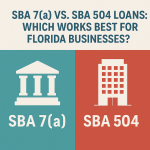
Read: SBA 504 loan and the SBA 7(a) loan: Which Is Better for Your Business?
What Is a Debt-Consolidation Loan?
A debt-consolidation loan is typically a personal loan used to pay off several existing debts. Instead of making separate payments to multiple creditors, the borrower uses the new loan to settle eligible balances and then repays one lender according to an agreed schedule.
For example, someone with three credit cards carrying different interest rates may qualify for a personal loan with a fixed interest rate and a repayment period of four years. If the new loan has a lower overall borrowing cost, the borrower may save money while making repayment easier to manage.
Some lenders send the funds directly to creditors, while others deposit the approved amount into the borrower’s bank account. When the money is deposited into a personal account, the borrower is generally responsible for paying off the original debts.
Debt consolidation does not automatically eliminate debt or reduce the principal owed. Its primary purpose is to reorganize existing obligations under potentially more favorable terms.
Best Debt-Consolidation Loans to Consider
The right lender depends on your credit score, income, borrowing needs, and preferred repayment period. The following companies offer personal-loan options that may be suitable for debt consolidation. Availability, eligibility requirements, and advertised terms should be confirmed directly with each provider before applying.
1. SoFi Personal Loans — Best for Borrowers With Strong Credit
SoFi is a financial services company offering unsecured personal loans that can be used for eligible debt-consolidation purposes. It may appeal to borrowers who have good credit, a stable income, and several high-interest balances they want to combine.
One potential advantage is that SoFi has offered personal loans without an origination fee, although applicants should verify the current terms of their specific offer. Eligible borrowers may also receive an interest-rate discount for enrolling in automatic payments.
SoFi may be worth considering when the goal is to replace expensive credit card debt with a single fixed-rate loan. Depending on the approved amount and terms, borrowers can establish a repayment schedule that makes budgeting more predictable.
The main limitation is that the lowest advertised rates are generally reserved for applicants with stronger credit profiles. Borrowers with lower credit scores may receive substantially higher rates or may not qualify.
Best for: Borrowers seeking a potentially competitive rate, predictable monthly payments, and low upfront fees.
2. LightStream — Best for Excellent-Credit Borrowers
LightStream, the online lending division associated with Truist Bank, offers unsecured personal loans for several purposes, including debt consolidation.
Its products may be attractive to applicants with excellent credit, established credit histories, and sufficient income to support the proposed monthly payment. Eligible borrowers may receive competitive interest rates and flexible repayment terms, depending on the loan product.
A notable feature of LightStream’s personal-loan offering has historically been the absence of origination fees and prepayment penalties. These features can help reduce the cost of borrowing, particularly for people who want to pay off their debt ahead of schedule.
However, borrowers should check the lender’s current eligibility criteria and application process. A lender with competitive advertised rates may not be the most suitable choice for someone with limited credit history or a recent record of missed payments.
Best for: Applicants with excellent credit who want to consolidate expensive debts without unnecessary loan fees.
3. Discover Personal Loans — Best for Straightforward Repayment
Discover offers personal loans that may be used to consolidate eligible debts. Its lending products can appeal to borrowers who prefer a clear repayment schedule and a straightforward application process.
A fixed-rate personal loan allows borrowers to know their scheduled monthly payment in advance, assuming the loan remains in good standing and the contract terms do not change. This can make household budgeting easier than managing multiple revolving credit card balances.
Discover has advertised personal loans without origination fees, late fees, or prepayment penalties. Borrowers should confirm that these terms remain available and apply to their specific offer before signing an agreement.
The lender’s maximum borrowing amount and eligibility rules may limit its suitability for people with very large debts. Applicants should also compare the offered annual percentage rate (APR) with the rates on their existing accounts.
Best for: Borrowers who prioritize predictable repayment and a loan structure with minimal fees.
4. Upgrade — Best for Fair-Credit Borrowers
Upgrade offers personal loans to eligible borrowers who may not qualify for the most competitive rates available to applicants with excellent credit. Its products can be considered by people seeking to consolidate credit card balances and other qualifying obligations.
Depending on the offer, Upgrade may provide options such as direct payment to creditors and automatic-payment discounts. Direct payment can be convenient because it reduces the work involved in distributing the loan proceeds across several accounts.
However, Upgrade may charge an origination fee, which can reduce the amount the borrower actually receives. Its interest rates can also be relatively high for applicants with weaker credit.
Before accepting an offer, compare the net amount available for debt repayment with the total amount owed to existing creditors. If the loan does not cover the balances in full, you may need another plan for the remaining debt.
Best for: Borrowers with fair credit who want to explore consolidation options beyond traditional low-rate lenders.
Read: How to easily Refinance a Mortgage
5. Achieve Personal Loans — Best for Comparing Consolidation Options
Achieve offers personal loans that may be used for debt consolidation, subject to eligibility and product terms. The company may be worth considering for borrowers who want to evaluate loan offers based on their financial circumstances rather than relying exclusively on advertised starting rates.
Some Achieve loan offers may include origination fees, and the available interest rate depends on factors such as creditworthiness, income, and existing obligations. Certain applicants may also qualify for discounts under the lender’s applicable conditions.
Borrowers should examine whether the lender provides direct creditor payments and determine how fees affect the loan proceeds. A loan with a slightly lower interest rate may not necessarily be cheaper if its upfront charges are significantly higher.
Comparing the total repayment amount over the entire loan term is particularly important when evaluating this provider against no-origination-fee alternatives.
Best for: Borrowers who want to compare personalized offers and are comfortable evaluating fees alongside interest rates.
6. Upstart — Best for Some Applicants With Limited Credit History
Upstart uses an underwriting approach that may consider factors beyond a conventional credit score, depending on its current lending model and applicable eligibility requirements. These factors can include aspects of an applicant’s education, employment, and financial profile.
This approach may make Upstart worth exploring for some borrowers who have limited credit histories but otherwise demonstrate the ability to repay a loan.
Approved funds may be used for eligible debt-consolidation purposes, subject to the loan agreement. However, applicants should pay close attention to the APR, origination fee, repayment period, and any conditions attached to the offer.
A more flexible underwriting process does not guarantee approval or a low interest rate. Borrowers with limited credit records may still receive expensive offers, so comparing alternatives remains essential.
Best for: Applicants whose credit files are relatively thin and who want to explore additional lending options.
7. Navy Federal Credit Union — Best for Eligible Credit-Union Members
Navy Federal Credit Union provides financial products to eligible members, including personal loans that may be useful for consolidating certain debts.
Credit unions can be worth comparing with online lenders because their products, fees, and approval criteria may differ from those offered by commercial banks. Navy Federal’s suitability depends on membership eligibility, the amount required, and the terms available to the applicant.
Borrowers should check whether the proposed loan has a lower APR than their existing obligations and whether any membership or product requirements apply. They should also confirm the approved repayment term and total interest payable.
Navy Federal is not an option for every consumer because membership is restricted to eligible individuals and qualifying groups.
Best for: Eligible members who want to compare a credit-union loan with offers from online lenders and banks.
Read: Fixed-Rate vs. Adjustable-Rate Mortgage: Which Is Right for You?
How to Compare the Best Debt-Consolidation Loans
Choosing the right lender involves more than identifying the lowest advertised interest rate. Borrowers should evaluate several factors before making a final decision.
Annual Percentage Rate (APR)
APR represents the annual cost of borrowing, including interest and certain mandatory fees. It provides a more useful basis for comparing loan offers than the stated interest rate alone.
A lower APR can reduce the total repayment cost, provided the loan amount and repayment period are comparable. Always review the personalized rate offered to you rather than assuming you will qualify for the lender’s lowest advertised rate.
Origination Fees
Some lenders deduct an origination fee from the loan proceeds. For instance, a 5% fee on a $10,000 loan equals $500. If that fee is deducted upfront, you may receive only $9,500 even though you are responsible for repaying the full $10,000, plus applicable interest.
A loan with no origination fee may therefore be more attractive, but only if its interest rate and other terms are competitive.
Repayment Terms
Debt-consolidation loans may have repayment periods ranging from a few years to longer terms, depending on the lender and product.
A longer term can reduce the monthly payment, making it easier to fit into a budget. However, it may also increase the total interest paid. A shorter term can cost less overall but requires a higher monthly payment.
Select a repayment period that balances affordability with the goal of becoming debt-free.
Direct Payment to Creditors
Some lenders offer to pay eligible creditors directly. This feature can simplify the consolidation process and reduce the risk of using the money for other expenses.
If the lender deposits the funds into your account, confirm that the amount is sufficient to clear the intended balances and arrange payment promptly.
Prequalification and Credit Checks
Prequalification can help you estimate your chances of approval and compare potential loan terms. Many lenders use a soft credit inquiry for initial estimates, which generally does not affect your credit score.
A formal application may involve a hard credit inquiry. Confirm the lender’s process before proceeding, particularly if you plan to compare several offers.
Benefits of Debt-Consolidation Loans
Debt consolidation can provide several advantages when the new loan is structured appropriately.
One monthly payment: Replacing several payment dates with one can make it easier to organize bills and avoid missed payments.
Potential interest savings: Borrowers who qualify for a lower APR may reduce the amount of interest paid over the repayment period.
Predictable budgeting: Fixed-rate loans generally provide scheduled payments, helping borrowers plan their monthly expenses.
A defined repayment schedule: Unlike revolving credit card balances, a personal loan typically has a set maturity date. Regular payments gradually reduce the outstanding balance.
Possible credit-score improvement: Paying existing revolving balances down can improve credit utilization. However, opening a new account and applying for credit can initially affect a credit score, and results vary by individual.
Potential Risks to Consider
Debt consolidation is not suitable for every financial situation. If the new loan carries a high APR or substantial fees, it may cost more than keeping the original debts.
Another concern is extending the repayment period. A smaller monthly payment may appear attractive, but borrowers could pay more interest over several additional years.
There is also a risk of accumulating new credit card balances after consolidation. If the original accounts remain open and spending continues, the borrower could end up with both the consolidation loan and new debt.
For these reasons, consolidation should be accompanied by a realistic budget, reduced discretionary spending where necessary, and a plan to avoid unnecessary borrowing.
Read: How Debt-Consolidation Loans Work: A Practical Guide for Borrowers
How to Apply for a Debt-Consolidation Loan
The application process generally involves the following steps:
- List your existing debts. Record each balance, interest rate, minimum payment, and outstanding fee.
- Calculate the amount required. Include the balances you intend to clear and account for any fees that could reduce the available loan proceeds.
- Review your credit report. Check for errors and understand your current credit position before applying.
- Compare multiple lenders. Obtain prequalified offers where available and compare APRs, repayment periods, fees, and eligibility requirements.
- Choose an affordable offer. Make sure the scheduled payment fits your budget without compromising essential expenses.
- Pay off the original debts. Confirm that each creditor has received the required payment and check whether any residual interest remains.
- Maintain regular repayments. Set up reminders or automatic payments where appropriate and monitor the loan until it is fully repaid.
Are Debt-Consolidation Loans Better Than Other Debt-Relief Options?
A personal loan is not the only way to manage multiple debts. Borrowers with substantial credit card balances may also consider a balance-transfer credit card, particularly when they qualify for a promotional interest rate. These offers may include transfer fees and an introductory period after which a higher APR applies.
A nonprofit credit-counseling agency may help eligible consumers establish a debt management plan. Such plans can sometimes secure reduced interest rates without requiring a new loan.
Debt settlement is different because it involves negotiating with creditors to accept less than the full balance owed. It can damage credit and expose borrowers to additional costs or collection activity, so its risks should be carefully evaluated.
The best option depends on the amount owed, the borrower’s financial stability, credit profile, and ability to make consistent payments.
Read: FHA vs. Conventional Loans: What Is the Difference?
Final Thoughts
The best debt-consolidation loans are those that make repayment more manageable without creating unnecessary costs. SoFi and LightStream may appeal to borrowers with strong credit, Discover offers a straightforward personal-loan option, and Upgrade, Achieve, and Upstart may be worth exploring depending on individual eligibility. Eligible Navy Federal members can also compare credit-union financing.
Before applying, compare personalized APRs, origination fees, monthly payments, and total repayment costs. Most importantly, make sure the new loan genuinely improves your financial position. Consolidation works best when it is combined with responsible spending, consistent payments, and a clear commitment to paying off existing debt.
Editorial note: Loan availability, rates, fees, and eligibility requirements can change. Verify current terms directly with each lender before applying. This article is for general educational purposes and does not constitute individualized financial advice.

Contact us; Kokobest04@gmail.com
- Best Same-Day Personal Loans for Emergencies: Top Lenders, Costs, and How to Apply - October 20, 2026
- Secured vs. Unsecured Personal Loans: Key Differences, Benefits, Risks, and How to Choose - October 20, 2026
- Best Debt-Consolidation Loans: Top Lenders, Benefits, Rates, and How to Choose - October 20, 2026











1 thought on “Best Debt-Consolidation Loans: Top Lenders, Benefits, Rates, and How to Choose”